Thermal Control of CubeSats using Micro-structured Films
a passive film, modeled on the Saharan silver ant, to keep CubeSat electronics cool
- project
- 02 of 05
- event
- NASA SEES
- credit
- Research conducted through the NASA STEM Enhancement in Earth Science internship, mentored by Bridget Kimsey.
- links
- Read the paper →
01the problem
- CubeSats are shoebox sized with almost no mass budget for cooling hardware
- AI chips on board run hot and absorbed sunlight adds to the load
- radiation flips bits in memory and corrupts what the chip computes
- radiation hardened parts exist but lag commercial chips badly on performance
02the mechanism
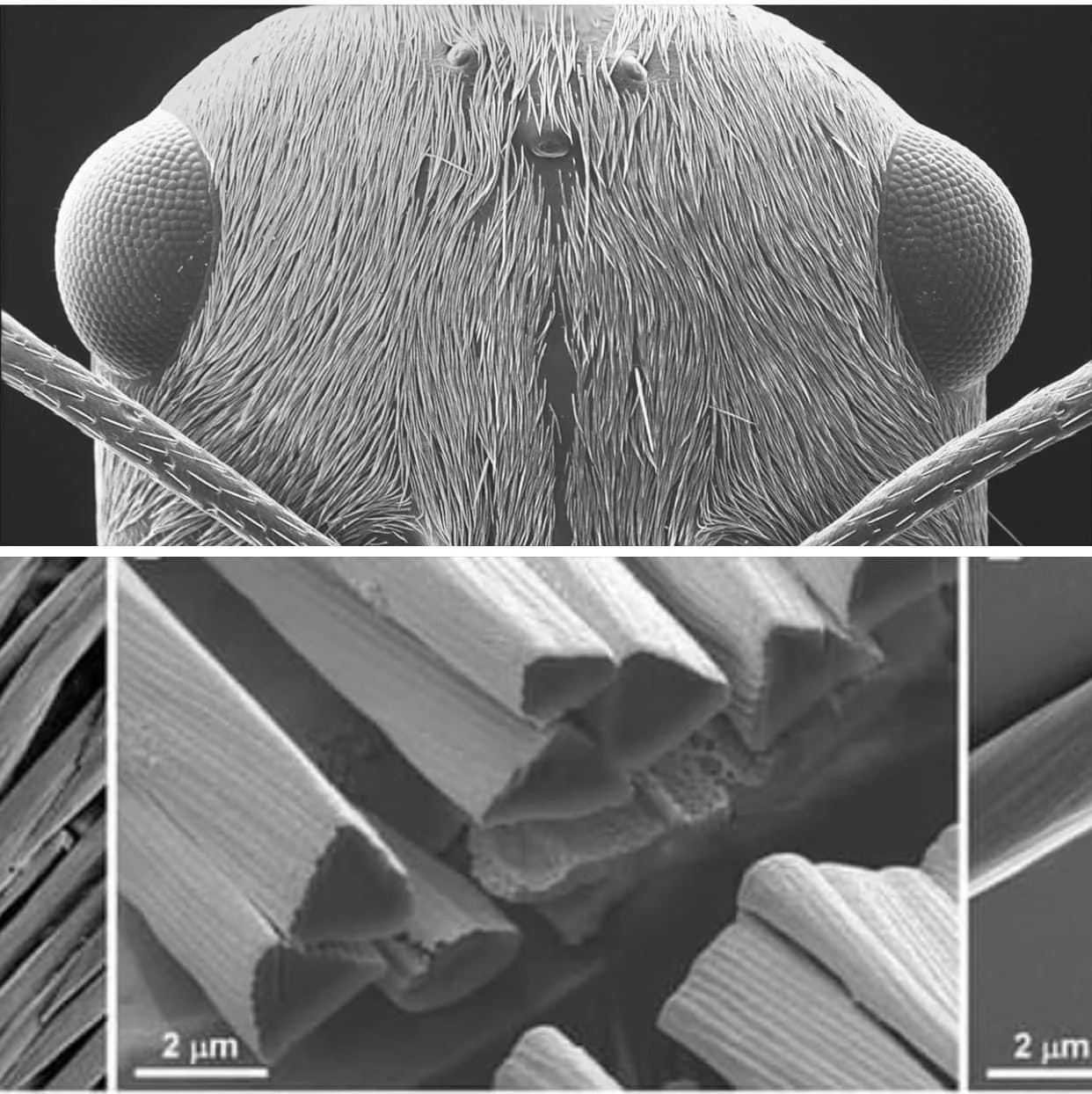
- the Saharan silver ant survives midday desert heat with no active cooling
- its hairs have a triangular cross section that drives total internal reflection
- the same geometry raises emission in the mid infrared
- reflecting and radiating at once is exactly what a satellite face needs
03the proposed film
- replicate that triangular microstructure in a thin silicone film
- mount on the minus Z face and couple it to the internal electronics
- passive throughout, no power draw and almost no added mass
04results
- research conducted through the NASA STEM Enhancement in Earth Science Internship
- paper published on SSRN and available to read
- literature supports solar reflectance above 95 percent for this structure class
- passive throughout, so it draws no power and adds almost no mass to the satellite